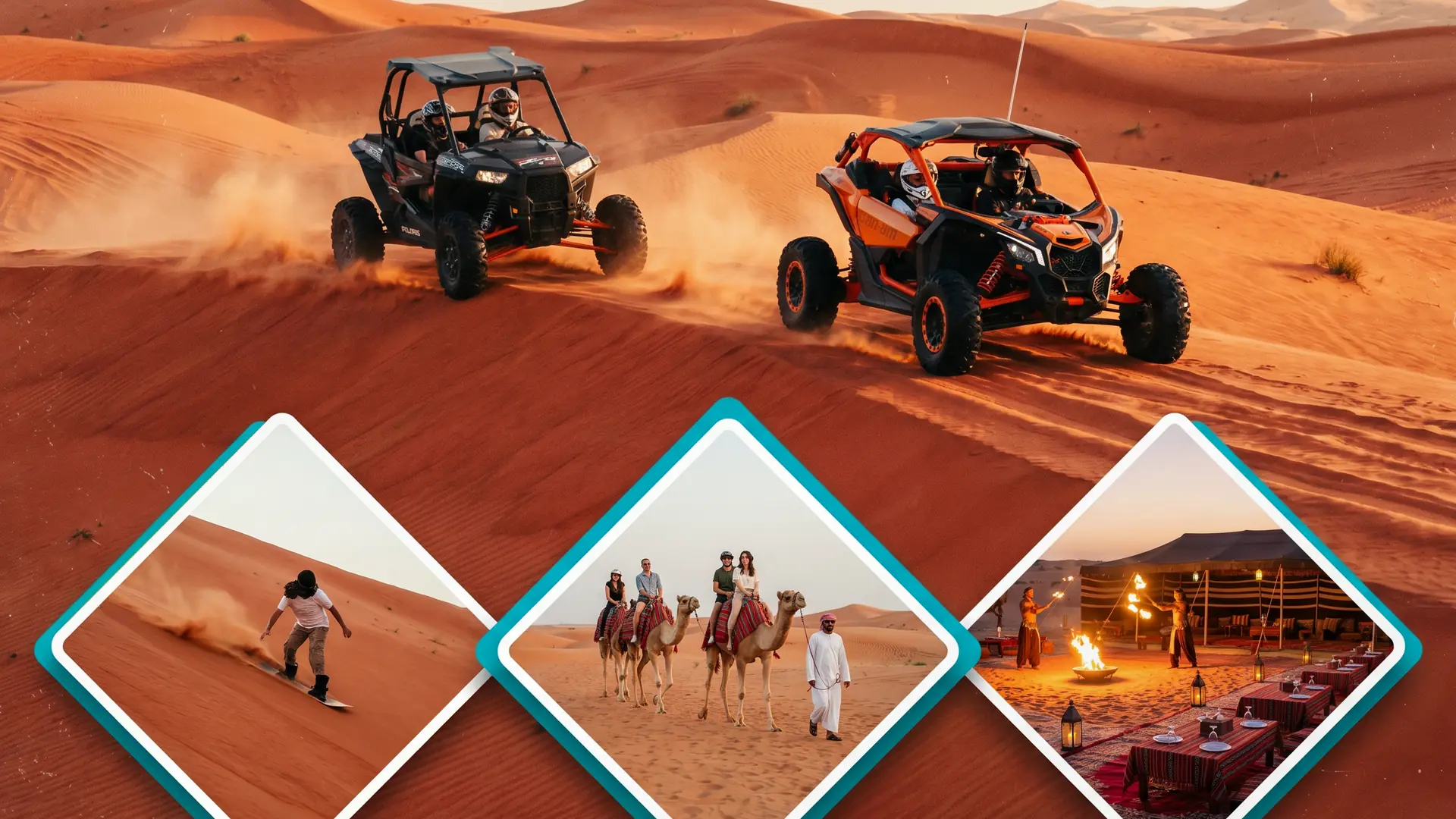
Can you actually take photos or shoot video while you're driving a dune buggy?
Not really, and not safely. Both hands are working the wheel and the throttle for almost the entire session, so the real filming happens at the stops the guide calls, not mid-throttle on a dune face.
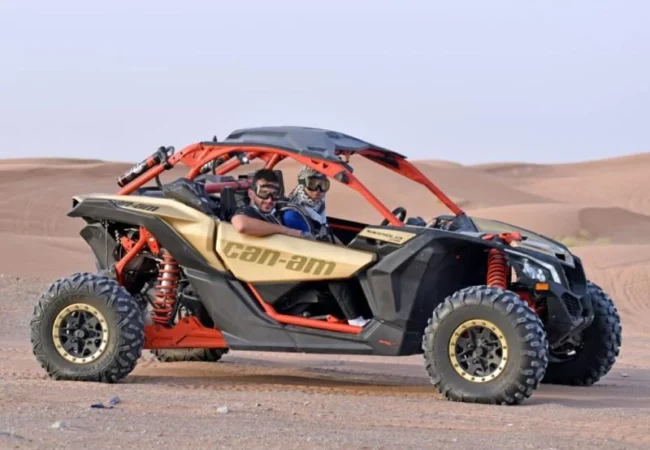
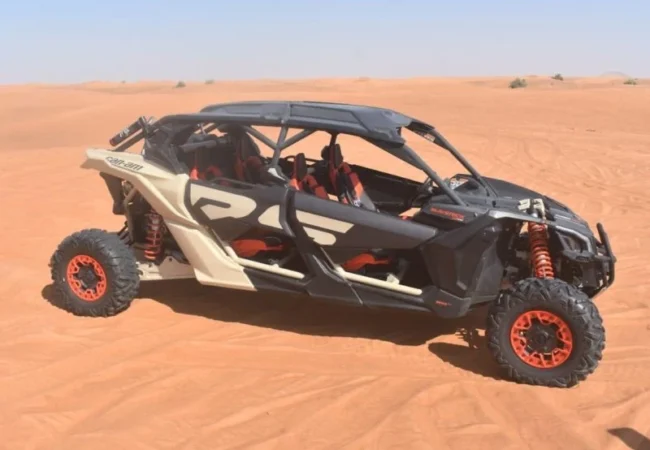
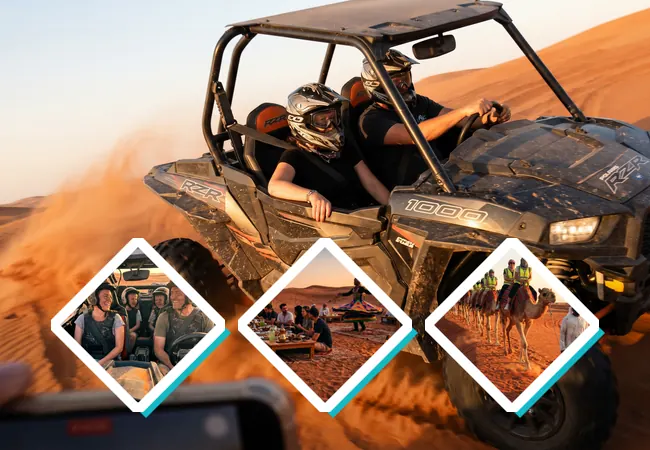
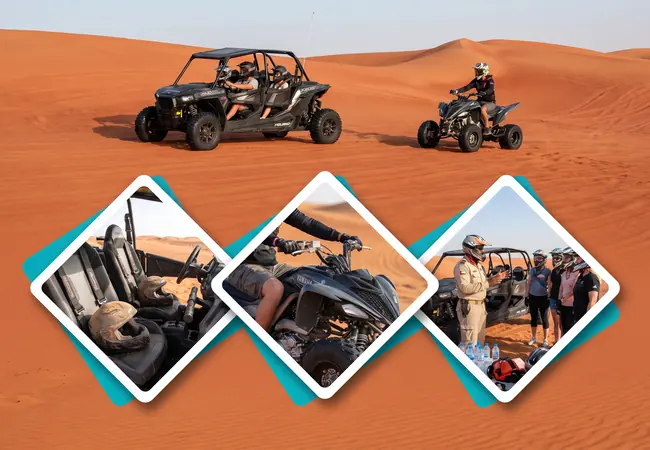
This trips people up because a buggy feels, for the first five minutes, like something you could half-drive with one hand. It is not. The harness holds you upright through a climb or a drop, but your hands still need to correct the wheel constantly on loose sand, and the throttle response on a Polaris or a Can-Am is sharper than most rental cars — let go of concentration for two seconds on a descending face and you feel it immediately, usually as a lurch sideways rather than anything dramatic, but enough to put a phone straight into the footwell.
The dust does not help either. Even with goggles on, a following buggy kicks up enough sand that pulling a phone out mid-route mostly gets you a screen full of grit and a blurred, bouncing frame nobody keeps. What actually works is trusting the structure of the session: the guide is not just leading the route, they are pacing it around a series of stops, and those stops are where cameras come out. Nobody rushes you through them either — that is built into the timing of a 1-hour or 2-hour booking, not an afterthought.
If you already know you want footage of the moving parts — dust roosting off the rear tyres, a buggy cresting a ridge — that is a passenger's job more than a driver's, which is worth weighing before you decide who takes the wheel first. The short version for anyone actually driving: enjoy the driving while you are driving, and let the stops built into the session flow do the photo work.
Is it worth mounting a GoPro or action camera, and will the operator let you?
Worth it, yes — and allowed. Every Polaris and Can-Am on this fleet runs a full roll cage, which doubles as a solid mounting point, and guides check that anything you have attached is actually secure before the session starts.
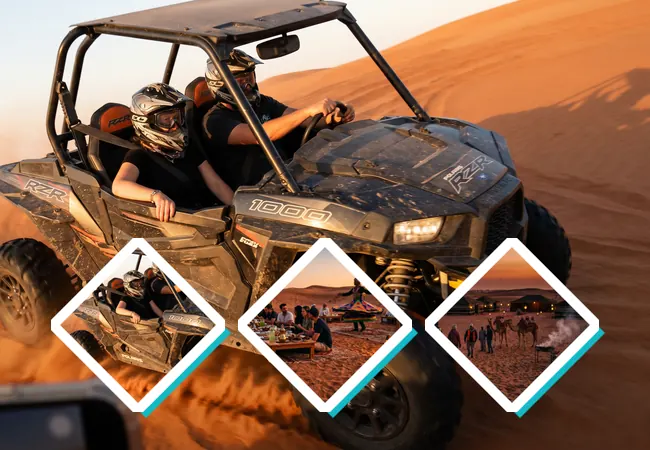
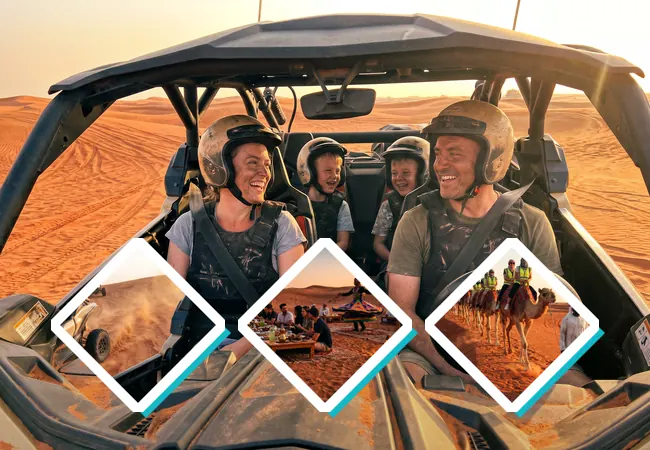
A chest-harness mount and a roll-cage mount give you two different videos, and it is worth knowing which one you actually want before you strap anything on. A chest mount gives you your own point of view — hands on the wheel, dune coming up through the windscreen frame, which is the shot most people picture when they imagine buggy footage. A roll-cage mount, angled back at the cabin, gets the wider picture: you, whoever is next to you, the machine itself kicking up sand. If you are in a 4-seater and someone else is filming rather than driving that leg, the roll-cage angle usually turns out better, since it captures the whole scene rather than just your hands.
What does not work is anything handheld or loosely clipped on. A phone or camera on a wrist strap alone gets thrown around on the rougher sections and carries a genuine drop risk on a descent, on top of being useless for stable footage anyway. Bring the mount, not just the camera — most action cameras ship with a basic adhesive or clamp mount, and that is exactly what guides are used to seeing checked at the same pre-ride inspection covered in the safety section, alongside the vehicle itself.
Two practical notes that catch people out: battery drain in Dubai heat is real, so a spare battery or a fully charged power bank is worth having on a two-hour or longer session, and a lens wipe matters more than you would think — fine dust settles on the lens within the first ten minutes and nobody notices until they are looking at the footage that evening.
When does a buggy session actually look good on camera — which moments, which light?
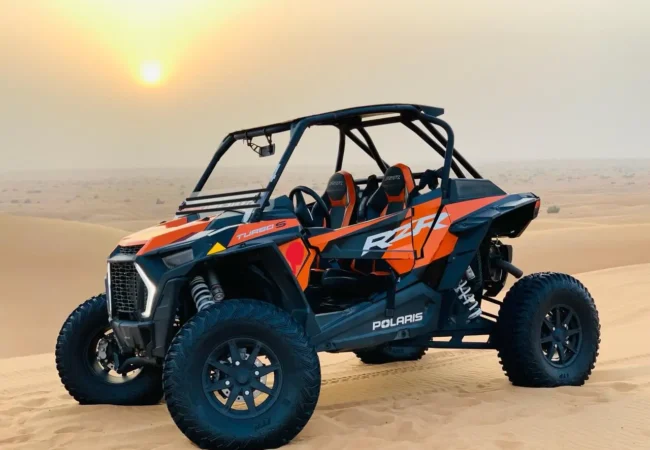
Three moments consistently deliver: the stop at a ridge crest with the dune field spread out behind you, a buggy coming off a dune face mid-roost, and the last twenty minutes of light before sunset. Flat midday sun mostly photographs as flat midday sun.
Ridge stops are the easiest win and the ones a guide calls without being asked, because they double as a genuine breather for the group. From the top of a proper crest you can usually see two or three other dune lines and whichever machines are following behind, which gives a photo actual depth instead of just sand filling the frame. Ask to linger an extra thirty seconds here if the group is not in a rush — nobody minds, and it is the one stop worth not rushing through.
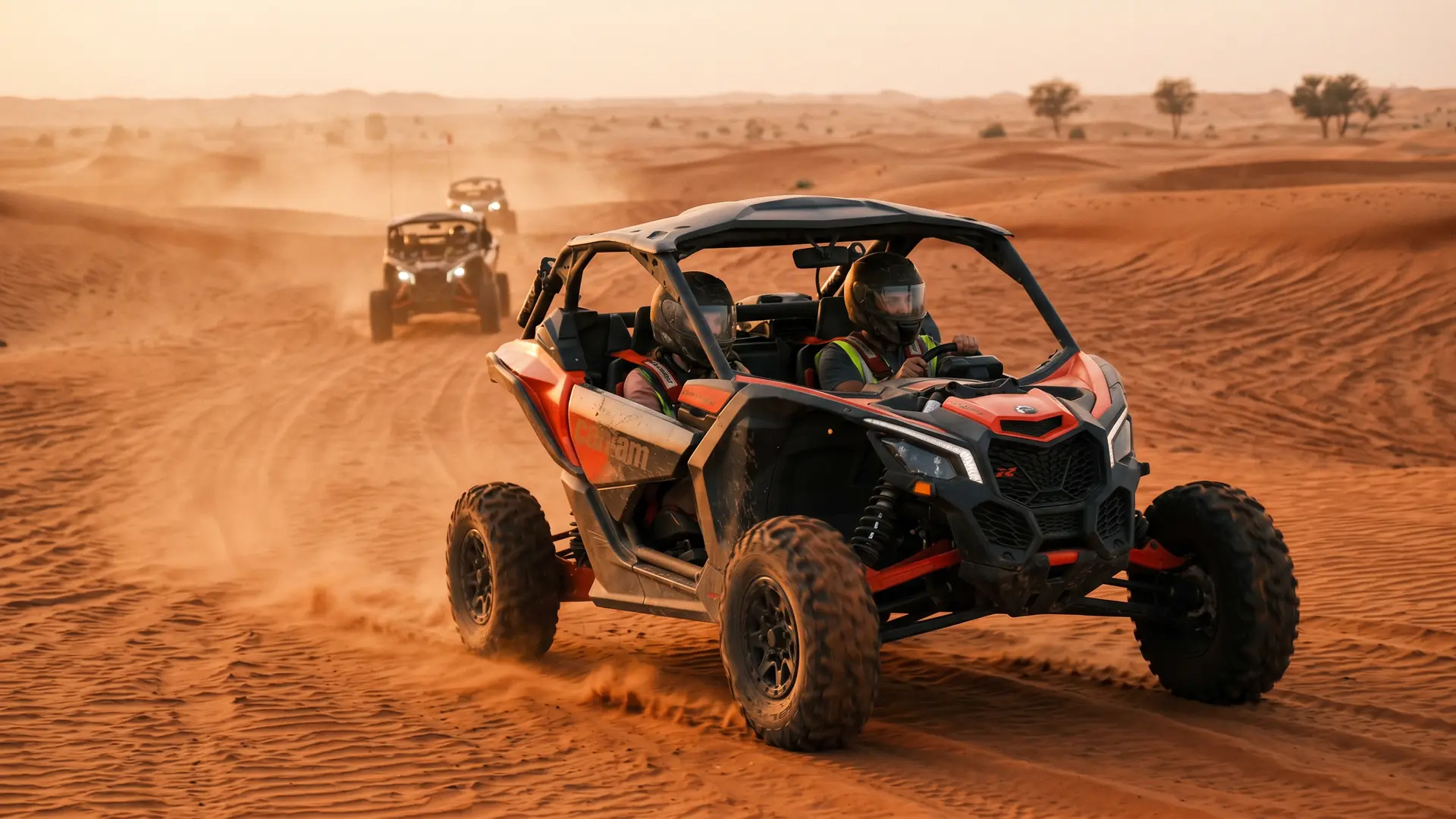
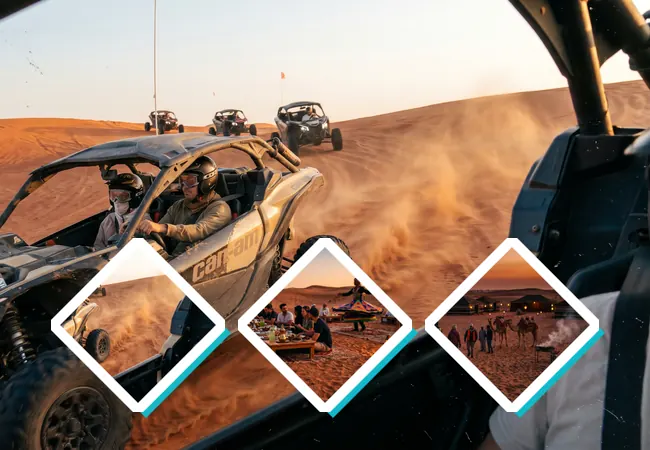
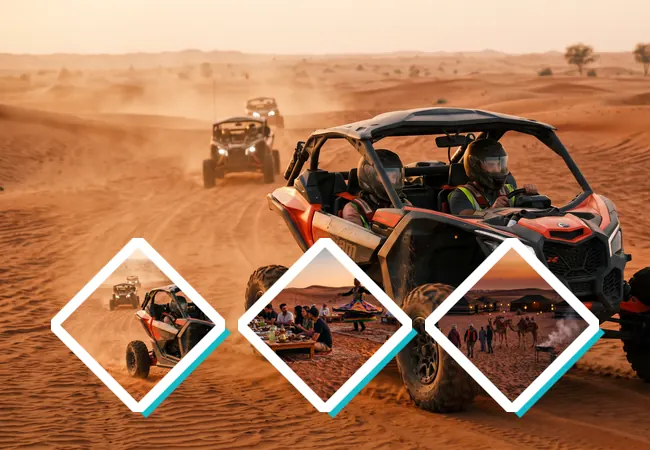
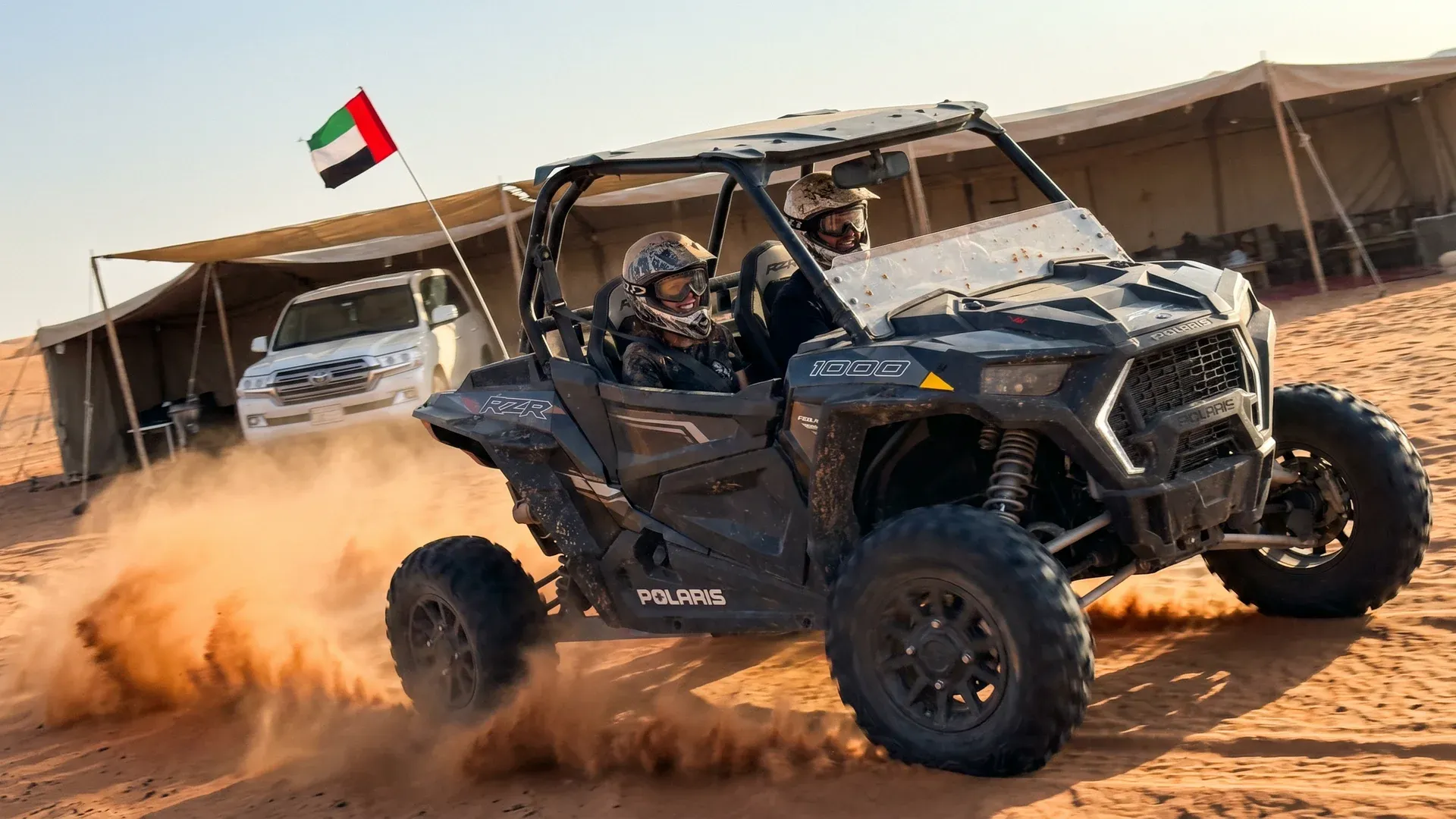
The roost shot — sand kicking up off the rear tyres as a buggy powers up or across a face — only works from outside the moving vehicle, so that is either the guide's shot or a passenger's in a following buggy, never the driver's own. If this is the shot you actually want, say so early in the session rather than hoping it happens; guides are generally happy to hang back and catch a run if you flag it, but they are not mind readers about which of you is chasing content versus just along for the ride.
Light matters more than most people expect walking in, and not just at the extremes — it is the difference between a photo you keep and one you delete on the spot. Overhead midday sun flattens the colour out of the red sand and throws hard, unflattering shadows under helmets and goggles, where the last stretch before sunset does the opposite on every count, warming the sand and giving every shot real depth.
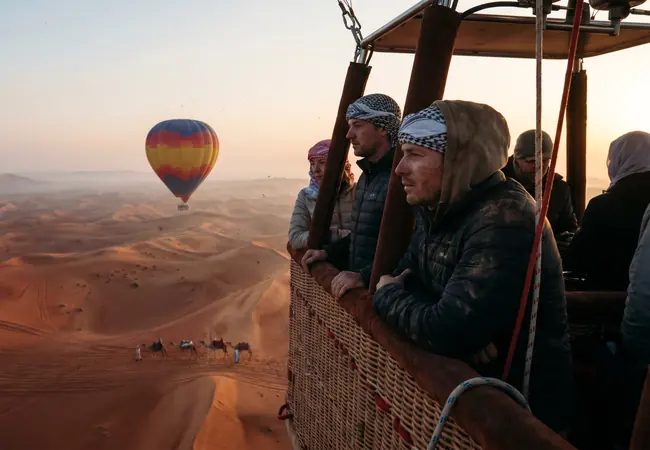
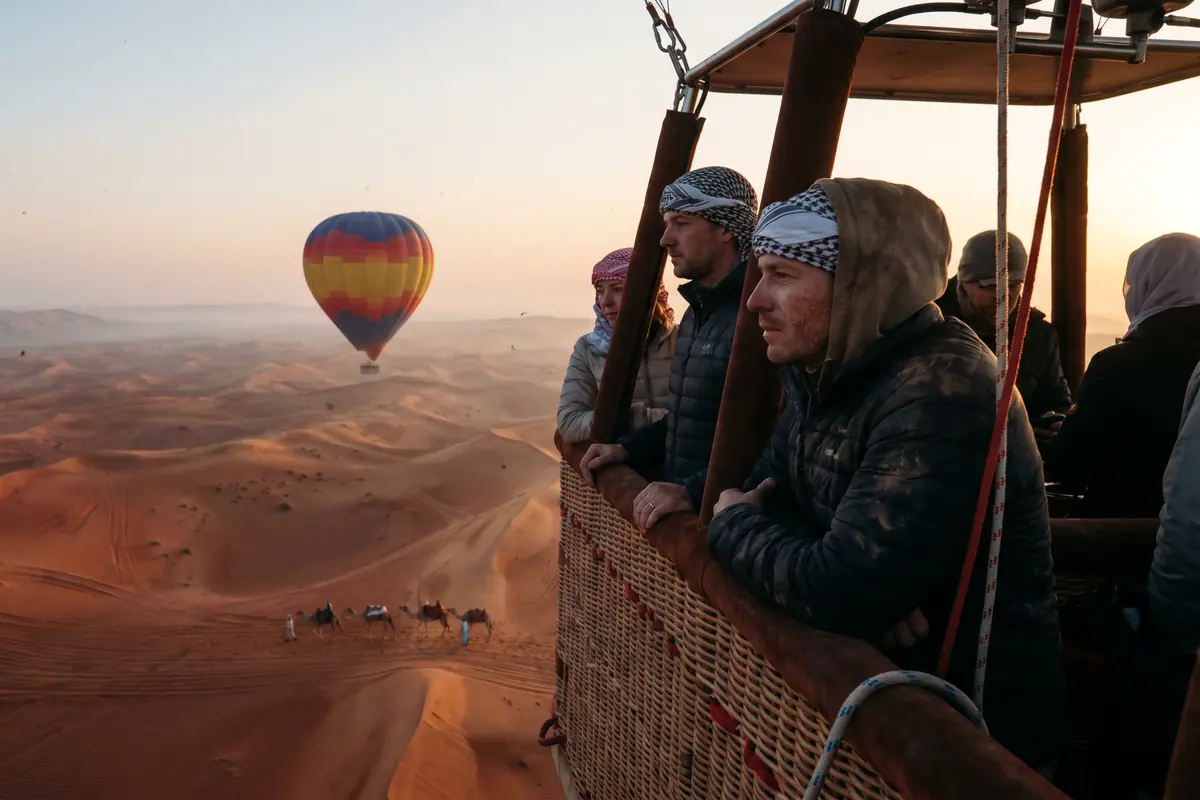
Sunrise gets less attention in this conversation, mostly because buggy sessions run through the afternoon and evening while the balloon flights claim the dawn slot. If your schedule ever lines up an early buggy session, the same raking light shows up at sunrise too — cooler in the shadows than the deep orange of dusk, but just as flattering to a dune face. Either end of the day beats the middle; it is really the eight or so hours around noon that photographers and guides alike treat as dead time.
Do the guides take photos of you during the ride, or is that entirely on you?
Yes, as standard — guides shoot through the session on their own phones and hand the photos over free once everyone is back at base. Treat it as a genuine bonus rather than a booked photo package, since keeping the group moving safely comes first.
This is not a paid add-on or something you need to request in advance; it is just part of how a session runs here. At the ridge stops and the warm-up area especially, guides will pull out a phone and grab a few frames of each rider without being asked, then pass the lot along at the end of the session. Quality varies rider to rider and stop to stop, for the obvious reason that a guide managing five or six machines cannot compose every shot the way a hired photographer would.
The way to actually improve your odds is simple, and most riders skip it: say something at the briefing. A quick "can you grab a shot of me on that ridge" takes ten seconds, and guides are generally glad to oblige, since it gives them something specific to aim for rather than guessing what each rider wants. Groups who mention nothing tend to get generic group shots; groups who flag a particular moment — the top of a specific dune, the instant before a descent — tend to get exactly that instead.
One more thing worth doing early rather than late: swap a number or ask how photos get sent before the session ends, not after everyone has already scattered toward transfers or the next stop. It is covered in more detail in the FAQ below, and it is the difference between having your photos that evening and chasing them down a week later.
Worth setting expectations on quality, too. These are phone photos from someone whose main job is running a safe session, not a hired photographer working a proper camera. They are genuinely decent more often than not, especially at the ridge stops where the guide has thirty spare seconds and a clean view, but do not walk in expecting DSLR-level composition or any editing afterward. If professional-grade photography is the actual goal for your day, that calls for a separate, dedicated booking rather than something to expect bundled into a standard buggy session.
What do you actually do with your phone while driving if you still want the footage?
Secure it before the engine starts, not once you are already moving. A chest mount for continuous point-of-view footage, or handing it to a guide or passenger at the stops, are the two options that actually work. A pocket is not one of them.
Pockets fail for two boring but consistent reasons: the bouncing on rougher sand works a phone loose faster than you would expect, and getting in and out of a buggy at each stop is exactly when things slide out unnoticed. Riders who have lost a phone this way almost always describe the same moment — reaching for it at the end of a session and finding an empty pocket, with no idea which of the last three stops it happened at.
A chest-mounted phone holder or action camera solves the continuous-footage problem entirely, since it rides with you rather than in a pocket, using the same harness anchor point covered above for GoPros — a phone holder clips on just as securely as a dedicated action camera does. If you are driving solo with nobody else in the buggy, this is genuinely your only route to footage of yourself mid-drive, since nobody else is there to film you from outside the vehicle.
If you are riding two-up, the simpler answer is to let whoever is not driving that leg hold the phone. This gets covered during the gear-fitting stage of the briefing, not as an afterthought — guides are used to riders asking to check a mount or confirm a passenger can film safely before the machine even starts moving. Realistic expectations help too: plan for a handful of solid clips at the stops and one continuous mounted run, not a highlight reel shot entirely by your own hand on the wheel.
If photos and video matter more than driving, is the passenger seat the smarter booking?
If content is genuinely the priority, yes. A passenger has both hands free for practically the entire session, where a driver only gets them free at the handful of stops the guide calls. Most people still want a turn at the wheel too, so splitting the booking works better than picking purely one role.
The honest math is simple: on a 30-minute or 1-hour buggy session, a driver's hands are on the controls for nearly all of it, with maybe five or six short windows where a stop allows a phone out. A passenger in the same buggy has their hands free for practically the whole ride, minus a bit of bracing on the rougher sections. If the goal for the day is genuinely footage over feeling, that gap matters.
The practical fix most riders land on is not choosing one role for the whole session — it is splitting it. Book a 2-seater with someone else and swap halfway, which guides expect and build stops around anyway, so nobody loses time to the changeover. Whoever is riding shotgun on a given leg gets the footage; whoever is driving gets the actual thrill of it. Over a 1-hour or 2-hour booking that means both of you end up with driving time and both of you end up with usable clips, rather than one person filming the whole way and never touching the wheel.
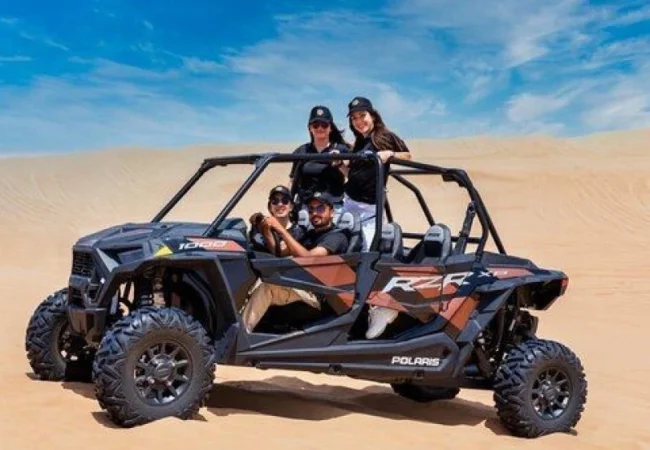
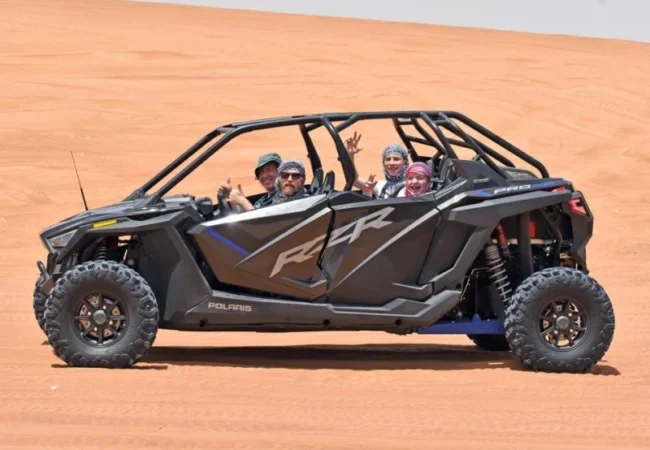
A 4-seater works the same way with more flexibility, covered from the driving side of things under 2-seater or 4-seater above — three people can rotate through a filming role across a longer session while the fourth drives, or two can pair off and swap independently. What does not work well is assuming one dedicated passenger will happily film an entire multi-hour booking without a turn driving; most people who try that ask to swap by the halfway point regardless of what they said going in.
How differently do sunset and midday sessions actually turn out in photos?
Considerably. Low sun at sunset rakes across the dune ridges and throws real shadow and texture into the sand; midday sun comes from directly overhead and flattens the same dunes into a pale, shadowless blur. If a specific look matters to you, the time slot is doing as much work as the machine you book.
The physics of it are simple enough once you notice it. Late in the afternoon the sun sits low, so light rakes sideways across every ridge and every set of tyre tracks, carving out shadow and shape that makes a dune actually look three-dimensional in a photo. At midday the same light comes almost straight down, which erases those shadows and leaves the sand looking flat and considerably paler than it does a few hours later — the deep rust colour Al Lahbab is known for needs that raking light to really show up on camera.
Colour temperature shifts too, not just shadow. Late-afternoon light runs warm, pulling the red out of the sand and giving skin tones and machines alike a golden cast that most people find more flattering than they expect. Midday sun runs cooler and harsher, which is fine for simply seeing where you are going but does nothing for you photographically — it is the same reason portrait photographers avoid shooting at noon anywhere in the world, deserts included.
In practical terms, this pushes toward booking the last daytime slot rather than the first if photos genuinely matter to you, and it is exactly why the buggy-plus-BBQ combos tend to deliver better galleries than a standalone midday ride — you get the raking light on the way in and the fire-lit camp evening afterward. That said, midday still has real advantages worth weighing: cooler winter temperatures make late-morning slots comfortable, and the dunes are quieter with fewer other groups drifting into your shots. If the trip allows it, a late-afternoon or early-evening slot is the one worth requesting first.
People also search for
Guide FAQ
Can two people share one buggy and swap who is driving?
Absolutely, and beyond 30 minutes it is what most pairs choose to do. A convenient stop gets called by the guide, seats swap, and you carry on. What does not work is skipping the briefing — both riders need to hear it at the start, so a late arrival cannot just slot in as a mid-session substitute.
Are the rates per person or per vehicle?
Vehicle-based, across the board. A 4-seater costs AED 800 whether it carries one rider or four, so four friends splitting that single buggy comes out cheaper per head than two people each renting their own 2-seater. Quads reverse the logic — each rider pays for their own machine. Safaris and balloon seats are priced individually, per passenger.
Is there a weight or height limit on the buggies?
No published figure, but the harness has to close properly and your feet need to reach the pedals without stretching, which is really what rules very small or very large riders in or out. If you are unsure, share your details ahead of time and the right machine gets set aside before you arrive.
Do the buggies actually have roll cages and seatbelts?
A roll cage and a proper harness come standard on every Polaris and Can-Am here — no lap belts on this fleet. That harness gets checked and adjusted on you specifically before the buggy moves, helmet and goggles handed over in the same breath, and the vehicle itself is inspected in front of you beforehand too.
What happens if the buggy gets stuck in soft sand?
Getting stuck is routine, not a crisis — nine times out of ten it is a driver backing off the throttle too early on a soft climb rather than anything mechanical. A guide swings back, hooks on a tow strap or gives the buggy a push, and you are moving again within a couple of minutes. No charge, and it does not meaningfully cut into your session time.
Is Al Lahbab the same area as Big Red?
Close, but not quite. Big Red is the one large dune on the Al Ain road where the roadside rental stalls cluster. Al Lahbab is the wider red-sand region past it, and that is where these sessions actually run — worth knowing, since the sand right by the road has seen a lot more tyres.
Can I book a session without hotel pickup?
Yes — pickup is optional, never bundled into the base price, so driving yourself out and booking the ride alone works just fine. The moment payment clears, directions to the base land in your inbox, and it is roughly a 45-minute drive from Downtown either way.
What is the cancellation and refund policy?
Terms are laid out before any payment happens, not hidden in a confirmation email afterward, and shifting a booking for weather never adds a cost. Read the policy in full on the operator's site at desertbuggyrental.com refund policy, or get specifics confirmed directly on WhatsApp.
Do sessions still run during Ramadan?
Yes, on an adjusted schedule. Daytime slots shift and evening camp bookings move later so they fall after iftar, which gives the whole month a different rhythm than usual. Confirm your exact dates ahead of travel, since the shift moves every year with the lunar calendar.
How soon do you actually get the guide's photos after the ride?
Same day, sent straight to your phone once you are back at the base — no separate booking, no charge, and no waiting on an email chain a week later. It is worth exchanging a number with your guide early in the session rather than after, in case anyone in your group heads off to their next stop right away.
 AED 599